Acting Before the Drought Hits: Somalia’s Bay and Bakool Regions Plan Ahead
A locally led anticipatory action plan aims to protect communities from drought before its worst effects arrive
In the Bay and Bakool regions of Somalia, drought is often counted in losses: dead livestock, failed harvests, families pushed from their homes into crowded displacement camps. A new anticipatory action plan (AAP) tries to change that sequence by acting before the damage begins.
The plan, developed by WAHAFA partners Plan International and READO, sets out how humanitarian and community actors can respond to a looming drought before it becomes a crisis. It combines seasonal forecasts, food security projections, drought indicators and observations from community members themselves. When those signals cross agreed thresholds, pre-approved actions are triggered across food security, water and sanitation (WASH), protection, education and risk communication.
Acting on Signals, Not Headlines
Traditional drought response often begins after conditions have already deteriorated, when relief is launched in response to visible suffering. Anticipatory action reverses that logic. The idea is to decide in advance what should happen when a warning appears, and to have the money ready to release when it does.
The Bay and Bakool plan follows that approach. Its triggers draw on several sources at once. Meteorological forecasts show what rainfall might look like. Food security projections estimate how households may fare. Drought indicators track conditions on the ground. And community observations, often the earliest and most granular information, are folded into the picture.
Because the plan was built with communities, government authorities and humanitarian partners together, the actions it calls for reflect local priorities as well as technical judgment.
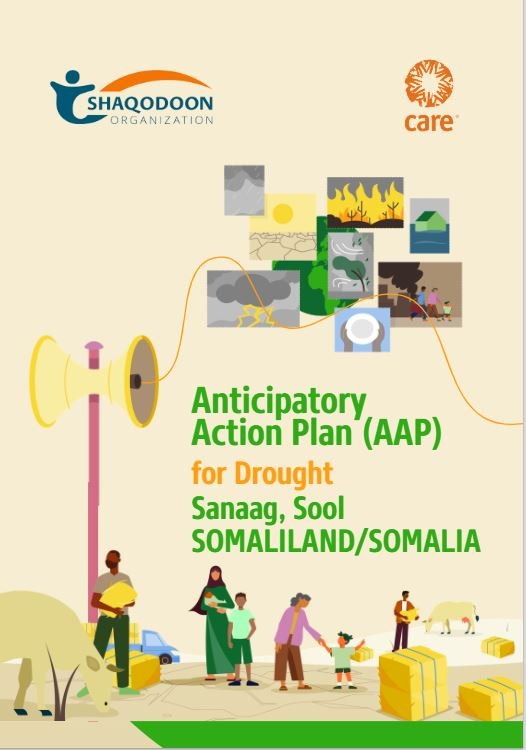
DOWNLOAD : https://www.anticipation-hub.org/Documents/Framework_documents/AAP_Drought_Somaliland_Somalia_WHH.pdf
12
0
Open source reference →
Leave a comment